[fusion_builder_container hundred_percent=»yes» overflow=»visible»][fusion_builder_row][fusion_builder_column type=»1_1″ last=»yes» spacing=»yes» center_content=»no» hide_on_mobile=»no» background_color=»» background_image=»» background_repeat=»no-repeat» background_position=»left top» border_position=»all» border_size=»0px» border_color=»» border_style=»» padding=»» margin_top=»» margin_bottom=»» animation_type=»» animation_direction=»» animation_speed=»0.1″ class=»» id=»»][fusion_text]Psoriasis
La psoriasis es la dermatosis que más frecuentemente compromete las uñas.
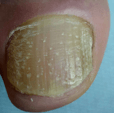
Los hallazgos clínicos de la psoriasis incluyen:[/fusion_text][/fusion_builder_column][fusion_builder_column type=»2_3″ last=»no» spacing=»yes» center_content=»no» hide_on_mobile=»no» background_color=»» background_image=»» background_repeat=»no-repeat» background_position=»left top» border_position=»all» border_size=»0px» border_color=»» border_style=»» padding=»» margin_top=»» margin_bottom=»» animation_type=»» animation_direction=»» animation_speed=»0.1″ class=»» id=»»][fusion_text]Punteado ungueal (“pitting”). En la cara dorsal de la placa ungueal. Es el signo más común de la psoriasis ungueal. El punteado psoriásico es típicamente irregular, profundo y distribuido al azar en la placa ungueal.[/fusion_text][/fusion_builder_column][fusion_builder_column type=»1_3″ last=»yes» spacing=»yes» center_content=»no» hide_on_mobile=»no» background_color=»» background_image=»» background_repeat=»no-repeat» background_position=»left top» border_position=»all» border_size=»0px» border_color=»» border_style=»» padding=»» margin_top=»» margin_bottom=»» animation_type=»» animation_direction=»» animation_speed=»0.1″ class=»» id=»»][fusion_imageframe lightbox=»no» lightbox_image=»» style_type=»none» hover_type=»none» bordercolor=»» bordersize=»0px» borderradius=»0″ stylecolor=»» align=»none» link=»» linktarget=»_self» animation_type=»0″ animation_direction=»down» animation_speed=»0.1″ hide_on_mobile=»no» class=»» id=»»]
[/fusion_imageframe][/fusion_builder_column][fusion_builder_column type=»2_3″ last=»no» spacing=»yes» center_content=»no» hide_on_mobile=»no» background_color=»» background_image=»» background_repeat=»no-repeat» background_position=»left top» border_position=»all» border_size=»0px» border_color=»» border_style=»» padding=»» margin_top=»» margin_bottom=»» animation_type=»» animation_direction=»» animation_speed=»0.1″ class=»» id=»»][fusion_text]Parches asalmonados en el lecho ungueal. También llamados “gotas de aceite”, son áreas irregulares de coloración amarilla o rosada en el lecho ungueal visibles a través de la placa ungueal como resultado de la inflamación psoriásica.[/fusion_text][/fusion_builder_column][fusion_builder_column type=»1_3″ last=»yes» spacing=»yes» center_content=»no» hide_on_mobile=»no» background_color=»» background_image=»» background_repeat=»no-repeat» background_position=»left top» border_position=»all» border_size=»0px» border_color=»» border_style=»» padding=»» margin_top=»» margin_bottom=»» animation_type=»» animation_direction=»» animation_speed=»0.1″ class=»» id=»»][fusion_imageframe lightbox=»no» lightbox_image=»» style_type=»none» hover_type=»none» bordercolor=»» bordersize=»0px» borderradius=»0″ stylecolor=»» align=»none» link=»» linktarget=»_self» animation_type=»0″ animation_direction=»down» animation_speed=»0.1″ hide_on_mobile=»no» class=»» id=»»]
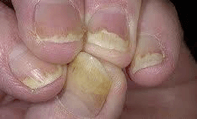
[/fusion_imageframe][/fusion_builder_column][fusion_builder_column type=»2_3″ last=»no» spacing=»yes» center_content=»no» hide_on_mobile=»no» background_color=»» background_image=»» background_repeat=»no-repeat» background_position=»left top» border_position=»all» border_size=»0px» border_color=»» border_style=»» padding=»» margin_top=»» margin_bottom=»» animation_type=»» animation_direction=»» animation_speed=»0.1″ class=»» id=»»][fusion_text]Onicolisis. Separación distal de la placa ungueal del lecho ungueal inflamado. Un borde eritematoso y hemorragias en astilla se asocian a menudo a onicolisis. La onicolisis y la hiperqueratosis subungueal puede ser la única manifestación de psoriasis.[/fusion_text][/fusion_builder_column][fusion_builder_column type=»1_3″ last=»yes» spacing=»yes» center_content=»no» hide_on_mobile=»no» background_color=»» background_image=»» background_repeat=»no-repeat» background_position=»left top» border_position=»all» border_size=»0px» border_color=»» border_style=»» padding=»» margin_top=»» margin_bottom=»» animation_type=»» animation_direction=»» animation_speed=»0.1″ class=»» id=»»][fusion_imageframe lightbox=»no» lightbox_image=»» style_type=»none» hover_type=»none» bordercolor=»» bordersize=»0px» borderradius=»0″ stylecolor=»» align=»none» link=»» linktarget=»_self» animation_type=»0″ animation_direction=»down» animation_speed=»0.1″ hide_on_mobile=»no» class=»» id=»»]
[/fusion_imageframe][/fusion_builder_column][fusion_builder_column type=»1_1″ last=»yes» spacing=»yes» center_content=»no» hide_on_mobile=»no» background_color=»» background_image=»» background_repeat=»no-repeat» background_position=»left top» border_position=»all» border_size=»0px» border_color=»» border_style=»» padding=»» margin_top=»» margin_bottom=»» animation_type=»» animation_direction=»» animation_speed=»0.1″ class=»» id=»»][fusion_text]Otros signos de psoriasis incluyen paroniquia, leuconiquia (uñas blancas), eritema de la lúnula y traconiquia (uñas ásperas y deslustradas).
La psoriasis de los pliegues ungueales recuerdan la paroniquia crónica y es a menudo precipitada o exacerbada por tratamiento con retinoides sistémicos.
El testeo para investigación de hongos es particularmente importante cuando la enfermedad se limita exclusivamente a las uñas sobre todo de los pies. Sin embargo, la onicomicosis y la psoriasis ungueal pueden coexistir.[/fusion_text][/fusion_builder_column][/fusion_builder_row][/fusion_builder_container]